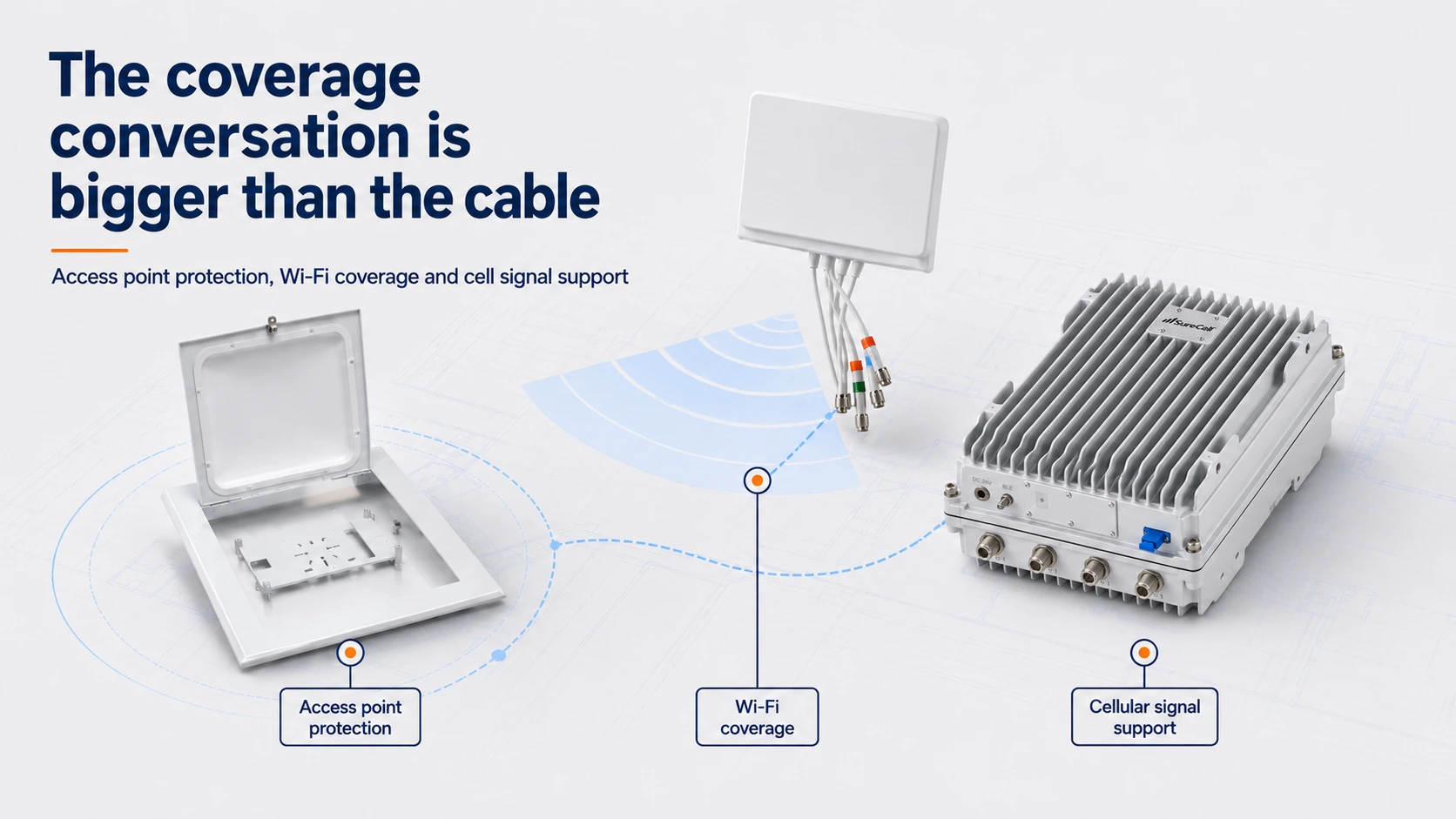
Wireless and cellular coverage problems often start as simple requests: Cat 6A for access points, a Wi-Fi refresh, fixing weak signal in the building, etc. AccelTex, Ventev and SureCall give you ways to improve service access, aim wireless coverage more intentionally, and protect access points, so you can deliver stronger solutions in the quote.
The coverage conversation is bigger than the cable
A lot of coverage conversations start with a basic ask.
“We need Cat 6A for wireless access points”
“We’re refreshing the Wi-Fi”
“Cell phones don’t work in parts of the building”
That’s enough to build a quote, but it may not be enough to solve the real problem.
Coverage is one of those areas where folks might not know what else to ask for.
They know they need access points, but they’re not thinking about where those access points will live, who can touch them, how they’ll be serviced or whether antennas are needed to direct coverage properly.
They know phone calls drop in certain areas but assume indoor cell coverage is too complicated or too specialized to bring up.
That’s the opportunity.
At our August Lunch & Learn, we’ll be looking at AccelTex, Ventev and SureCall (and more, read about the rest here), product lines that help you turn coverage questions into better conversations and stronger solutions.
If they’re asking for Cat 6A, ask about the access points
Cat 6A is often the go-to cable for wireless access point deployments. So when a customer needs Cat 6A, it’s worth asking:
Where are these access points going and what does the Wi-Fi need to support?
If the access point is going into a hospital, university or other public-access environment, it may need to be protected, hidden, secured or easier to service later.
That’s where AccelTex and Ventev access point enclosures come into play.
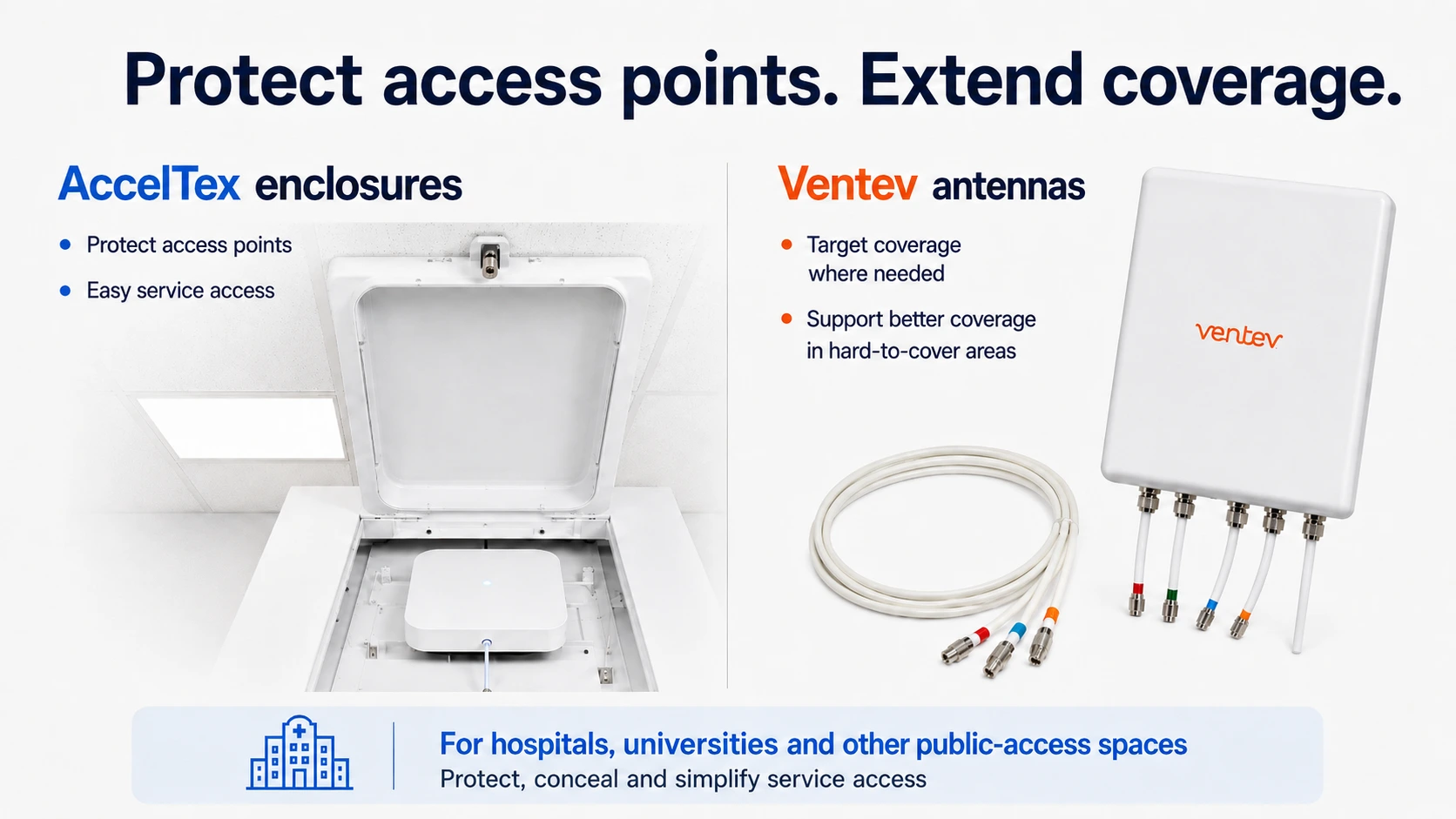
In hospitals, Wi-Fi can support patient monitoring, medical carts, mobile workstations, staff communication and safety workflows, so the install details matter. An access point that can be reached from below the ceiling can help reduce unnecessary disruption in sensitive areas, for example.
In universities, the challenge is often scale and exposure. Access points could be spread across residence halls, classrooms, lecture halls, libraries, gyms and other high-traffic spaces where devices can be seen, touched or damaged.
The enclosure conversation doesn’t need to sound like an upsell. It can be simple as:
Where will these access points be installed, who can reach them and do they need to be protected or easier to service later?
Those questions can uncover needs the customer never considered.
Sometimes the issue is the antenna
Access point placement is one piece of the wireless conversation; antennas are another.
They may want better Wi-Fi, but the real issue could be where the signal needs to go. High ceilings, long corridors, large lecture halls, gyms, outdoor common areas and dense campus spaces can all create coverage challenges.
To get to the deeper solution, move the conversation in this direction:
Is this just an access point issue or do we need to think about how the coverage is being aimed?
That’s the beginning of uncovering a need they might not’ve considered before the layout is finalized and where Ventev antennas can be a solid fit.
Bringing cellular coverage into the discussion
Of course, Wi-Fi isn’t the only coverage issue inside a building.
Customers may be dealing with dropped calls, weak signal, dead zones in basements, poor service in back offices or unreliable mobile communication in warehouses and large facilities.
SignalMax from SureCall slides in nicely here.
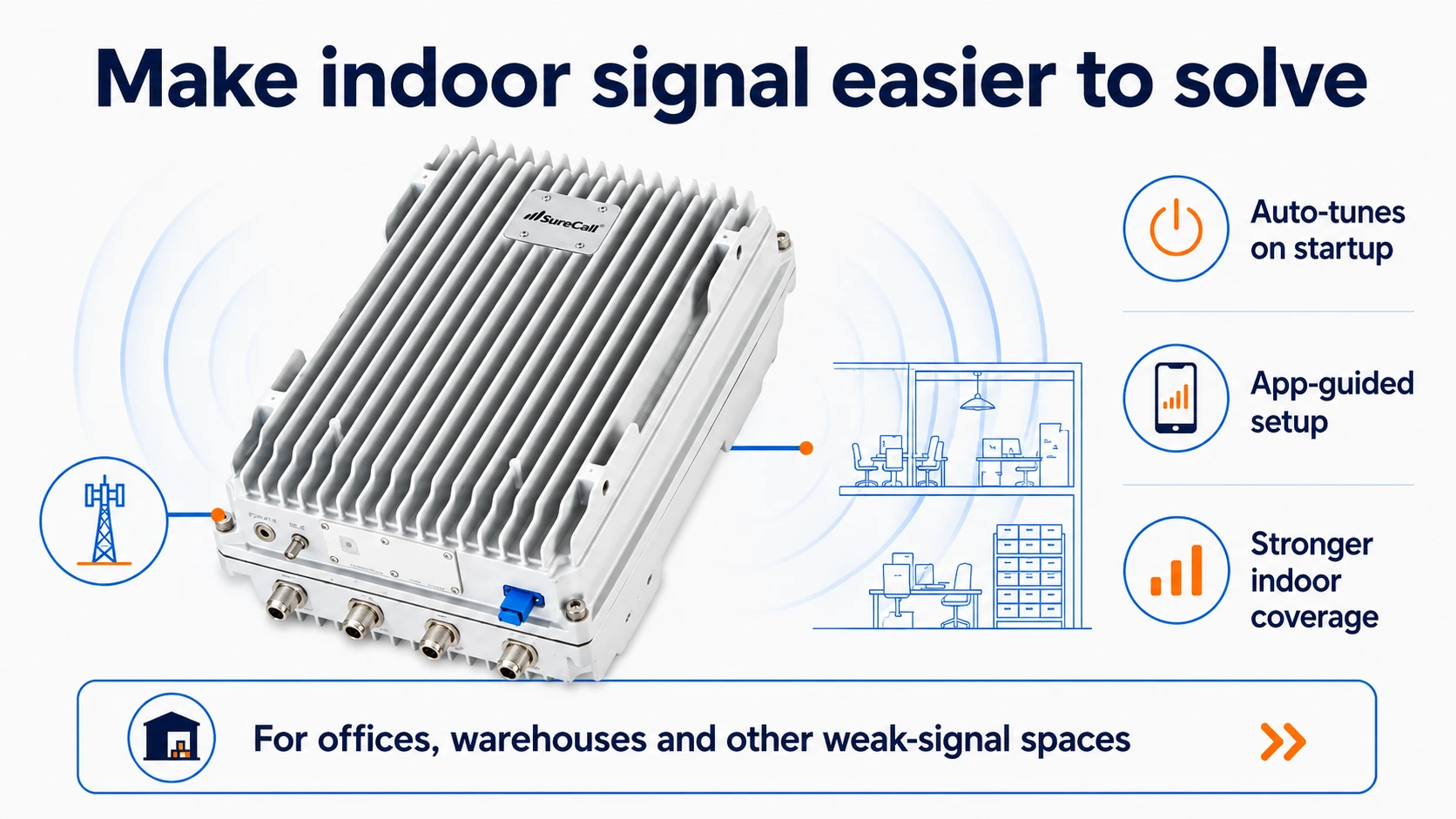
And it couldn’t be easier to get started with auto-tuning.
When the system powers on, SignalMax detects signal conditions and tunes itself to help support carrier bands without manual frequency programming.
The installer still needs to get the external antenna pointed in the right direction, but the SureCall app helps by showing real-time signal levels, making adjustments easier to make before everything is permanently mounted.
The practical advantage: the system is more approachable than expected.
How to lead the conversation there:
Are there parts of the building where cell phones stop working reliably?
If the answer is yes, SignalMax is worth discussing before the customer accepts poor signal is just “part of the building”.
Coverage problems get expensive when they’re scoped too small
The risk isn’t forgetting to sell an enclosure, antenna or cellular coverage system; it’s that the coverage plan stops too early, leaving core problems unresolved.
A Cat 6A drop gets you to the access point, but it doesn’t answer where the access point goes, who can reach it, how it will be serviced or whether the signal is aimed correctly.
A weak cell signal complaint tells you there’s a problem, but it doesn’t tell you whether the building needs a more complete plan.
AccelTex and Ventev handle the physical side of coverage: protection, placement, service access and antennas. SureCall helps address the cellular side, with auto-tuning that makes setup and optimization more approachable.
Join us at August’s Lunch and Learn to see how these fit into your project conversations. We’ll also be covering how Softing and Sumitomo take the guesswork out of fieldwork.
Call us at 262-788-9700 or shoot us an email at sales@capital-electric.com if you have any questions or to let us know you’re coming!