Your customer may ask for wearable safety badges, but the real project goes much further. See what contractors should ask, plan and connect to turn a button press into a coordinated response.
A safety badge is only as good as what happens next
Pressing a button can call for help. That part is easy.
The harder part is everything that follows: who gets alerted, what information they receive, how the message reaches them and what response is triggered.
That’s why wearable safety isn’t only a hardware conversation; it’s a response-system conversation.
Key takeaways
- Start with the emergency scenario. Define the real risks employees or site visitors face before choosing the device.
- Plan what happens after activation. Decide who gets alerted, what they need to know and what response should follow.
- Connect the badge to the broader safety plan. Paging, mobile alerts, visual messages and response workflows all need to work together.
Wearable safety is bigger than schools
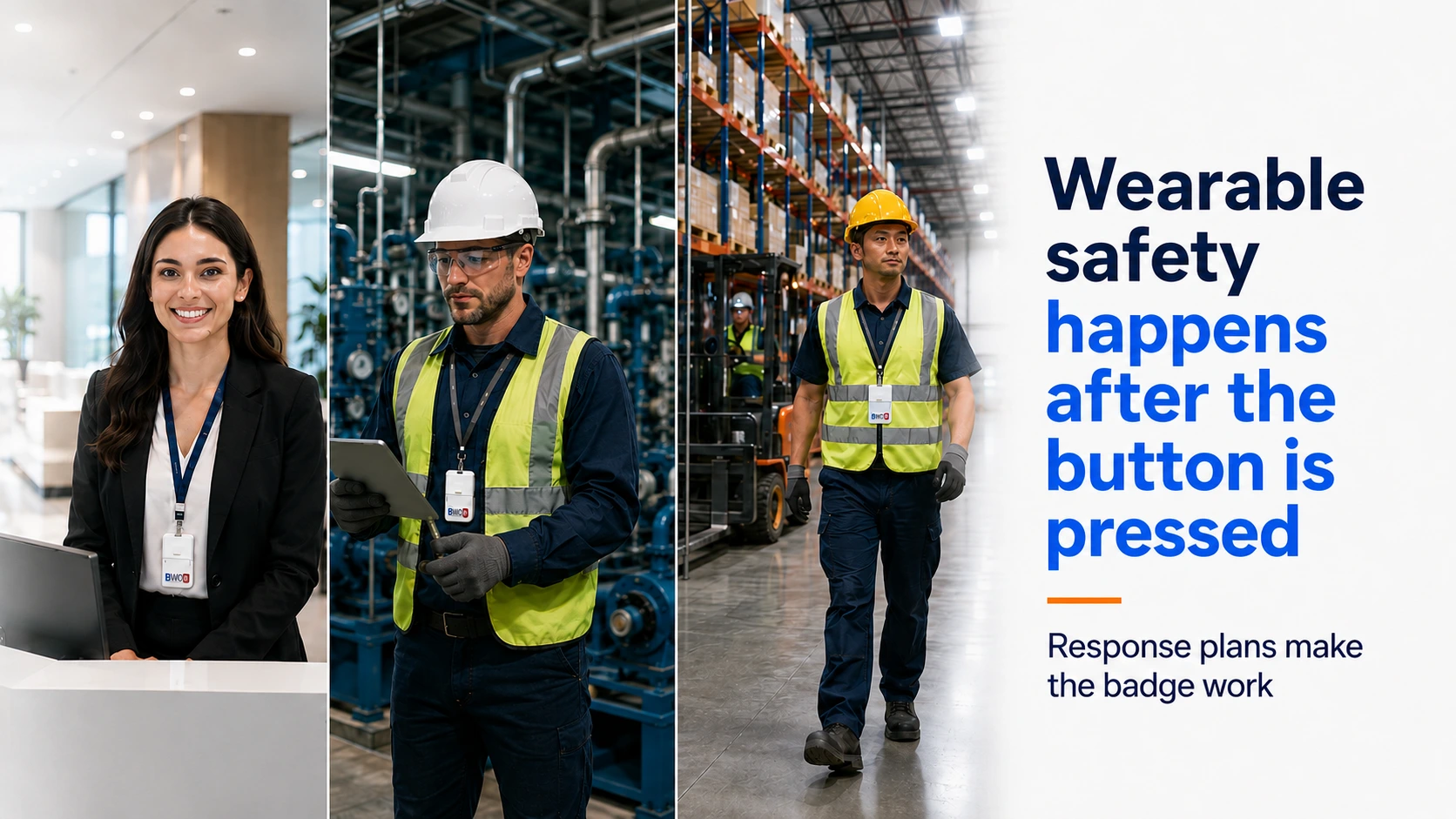
Wearable panic buttons are often associated with K–12 safety, but the same need exists across hospitals, manufacturing plants, warehouses, offices, municipal buildings and other public-facing facilities.
The common problem is simple: a person who needs help may not be near a phone, radio, computer or fixed panic button.
A wearable badge gives them a direct way to initiate a response from wherever they are
The badge starts the response
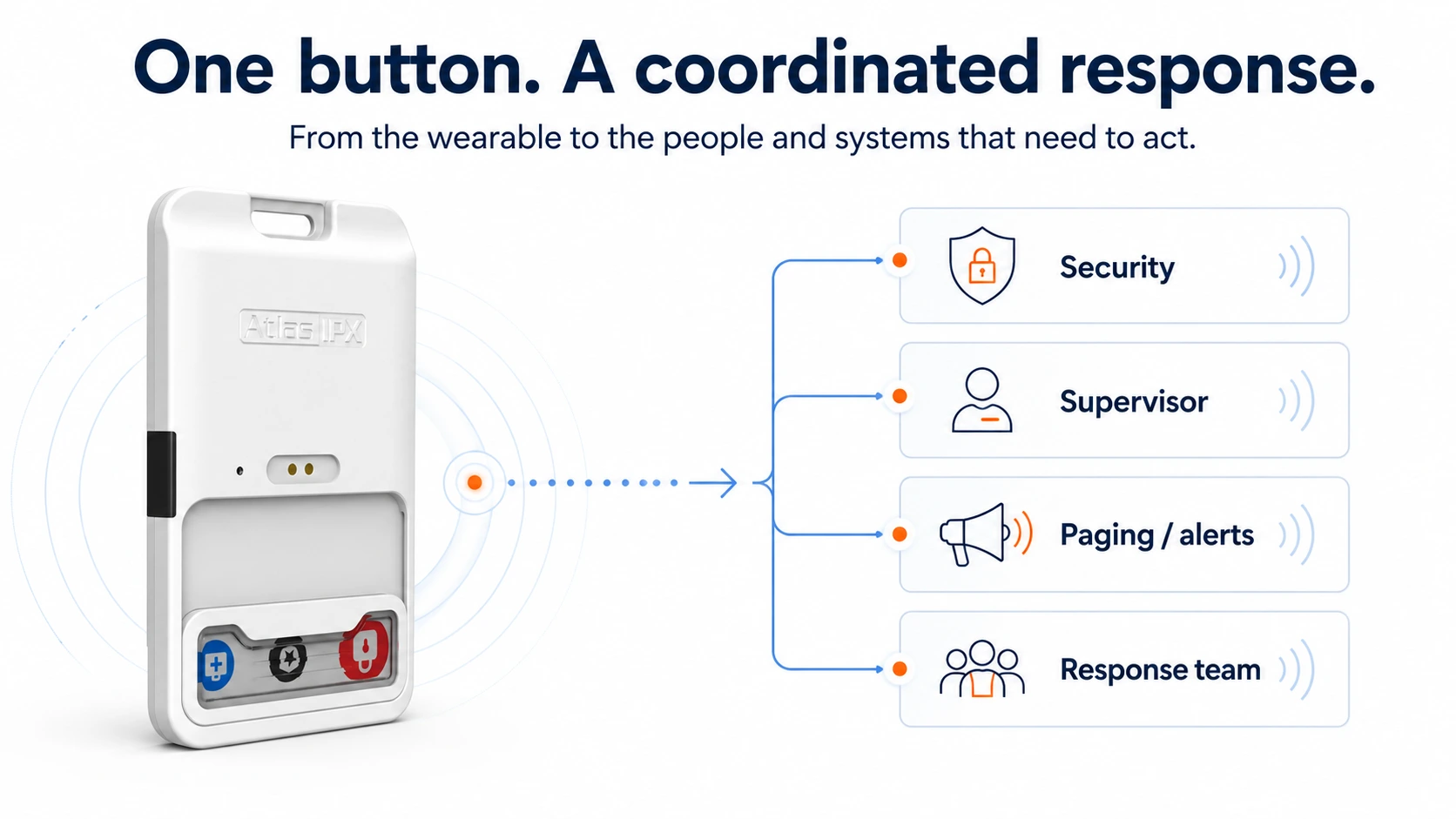
Pressing the button is only useful if the system knows what to do with the alert.
At minimum, it needs to communicate who needs help, where they are and what type of response is required.
From there, your customer can automate what happens next: alert security, notify a supervisor, call trained responders or trigger a broader emergency workflow.
That’s where wearable hardware from AtlasIED and platforms like InformaCast come into play.
Capital Electric can help you design the system and connect the pieces, from the wearable and notification platform to the paging, network and low-voltage infrastructure already in the facility.
Start with the real-world scenario
Different workplaces need different responses.
A receptionist facing an aggressive visitor needs a quiet way to request help without escalating the situation.
A lone employee in a storage area or mechanical room requires a way to signal an injury when no one else is nearby.
A forklift accident demands that supervisors, safety personnel and trained responders be notified immediately.
A weather event, chemical release or security concern calls for clear instructions throughout the facility.
Those scenarios should shape the system.
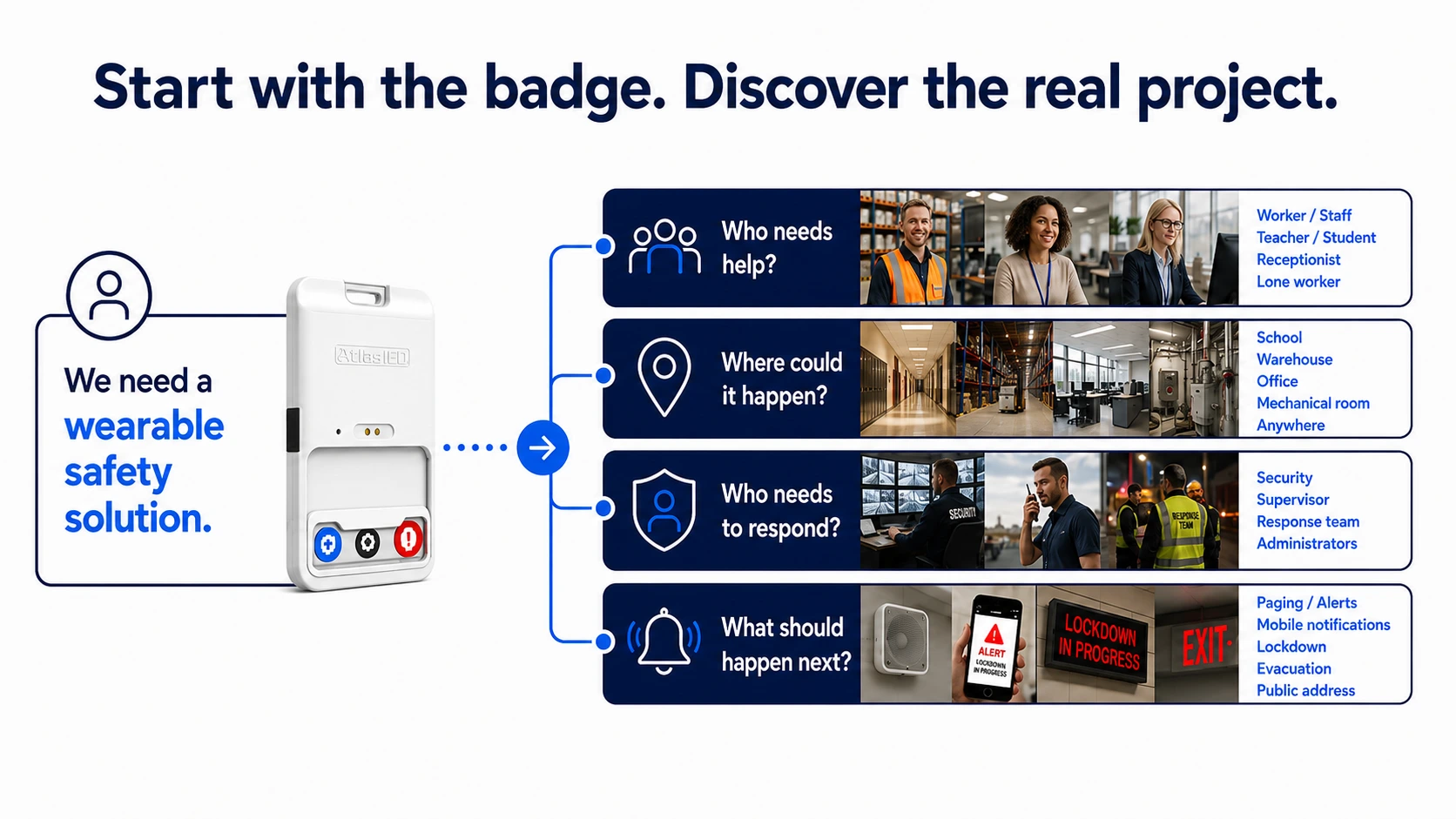
Before you get into the weeds on specs, learn this from the customer:
- Who is most likely to need help?
- Where could the incident happen?
- Who should receive the alert first?
- What information do responders need?
- Which communication systems should activate?
- What should employees do next?
Those questions uncover the real project far more effectively than asking, “Which badge do you want?”
Clear language makes the response stronger
Calling for help is only the first step. People also need to know what to do next.
The Standard Response Protocol from the I Love U Guys Foundation gives organizations a shared language for emergency response, with guidance for businesses as well as schools.
The five core actions are Hold, Secure, Lockdown, Evacuate and Shelter.
The value is consistency and specificity.
“Something happened near shipping” leaves too much open to interpretation.
“Evacuate to the south parking lot” gives people a clear action.
A wearable badge can initiate the alert, but the organization’s safety plan determines what message goes out, who receives it and what everyone is expected to do next.
Connect the badge to the systems people already interact with
A wearable badge shouldn’t operate as a stand-alone gadget.
The response should move through the communication channels your customer already relies on—paging, phones, mobile alerts, desktop notifications or visual displays—so the right people are reached immediately and can act.
So the question isn’t: can the badge send an alert?
It’s:
Can the organization get the right message to the right people and give them a clear action to take?
That’s when the badge becomes part of a complete safety and communication strategy instead of just another device.
Free response planning resources
The I Love U Guys Foundation has free Standard Response Protocol implementation guides for both workplaces and schools to get you started:
Plan the response before choosing the device
There’s a lot more to a wearable safety project than choosing a badge.
Capital Electric can help contractors and facility teams think through the application, connect wearable safety with paging and notification systems and bring the right expertise into the conversation.
When someone in a school or facility needs help, the real concern is how quickly they can get it and how clearly the response is communicated.
Let’s talk through that together for your next spec.
Call 262-788-9700 or email sales@capital-electric.com