Beyond the panic button: Inside AtlasIED’s Rapid Alert wearable safety system
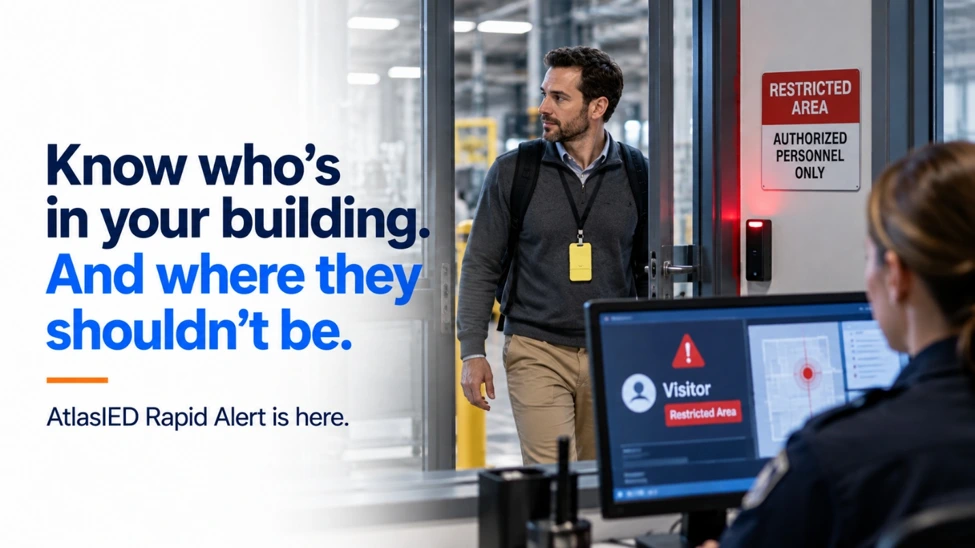
A teacher faces a threat in the classroom. A factory worker is injured on the production floor. A visitor enters a restricted area.
Different environments, same challenge: knowing when someone needs help, where they are and how to get the right people involved — because every second counts.
We’ve talked before about why wearable safety goes beyond pressing a button. Now, let’s get into the hardware that makes it possible.
AtlasIED’s Rapid Alert wearable safety system combines emergency badges, wireless infrastructure and management tools to help schools, healthcare facilities, manufacturers and commercial buildings keep tabs on safety across the entire campus (without phones, apps or Wi-Fi connection).
Key takeaways
- Badges for staff and visitors. Staff can request medical, security or lockdown assistance, while visitor badges support assistance requests and location-based oversight.
- The system is more than a wearable. Location beacons, gateways and cloud-based management work together to identify who needs help, where they are and what type of response is needed.
- Deployment depends on the facility. Building layout, coverage requirements and location accuracy determine the infrastructure needed to support the badges.
Two badges, different jobs
Rapid Alert is really two types of badges designed for different people and situations.
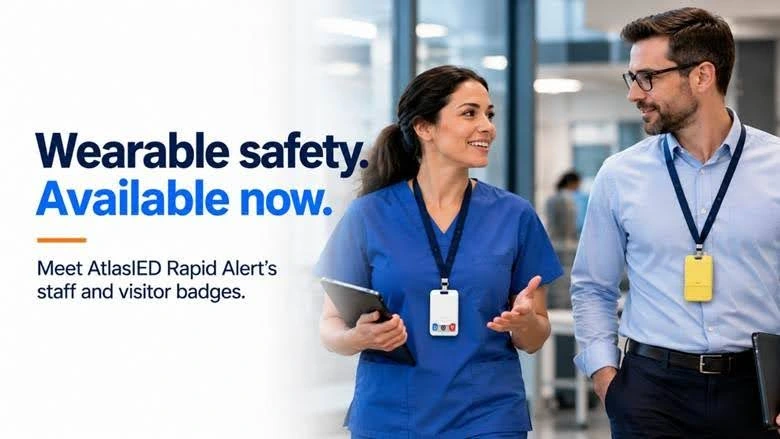
Staff badges have three dedicated buttons for lockdown, security assistance and medical help. Each triggers a corresponding, customized workflow, while built-in lights and vibration confirm the alert has been received.
Visitor badges have a single assistance button. Administrators can assign time and location restrictions, receiving notifications if someone overstays their visit or enters a restricted area. The badge itself flashes and vibrates, too.
Beyond just requesting emergency assistance, Rapid Alert helps facilities manage who’s moving through their buildings and where they should be.
And what about accidental activation? Rest assured, a protective cover helps avoid that, no chasing false alarms.
The badge is the visible part of the system.
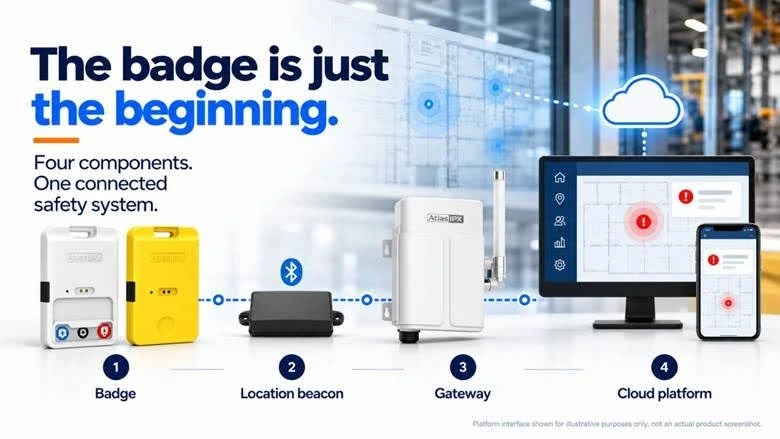
Behind it are three components working together:
- Location beacons: Battery-powered Bluetooth Low Energy (BLE) devices help determine a badge’s location inside or outside the building.
- Gateways: Connect the wearables to the cloud using technologies including Long Range Wide Area Network (LoRaWAN), Power over Ethernet (PoE) and LTE connectivity.
- Rapid Alert Wearables Cloud: The management platform identifies the badge, its location and the type of alert, giving administrators the information they need to respond.
When someone presses a badge button, the system collects location information and forwards the alert through gateways to the cloud.
The result? Responders aren’t left wondering who called for help or where to look.
Rapid Alert can operate independently or integrate with AtlasIED’s AIX security platform, which supports coordinated incident management and room-level location identification.
What does it take to equip an entire building?
Deploying Rapid Alert isn’t simply a matter of ordering a badge for every employee and calling it a day. You need the infrastructure to support them.
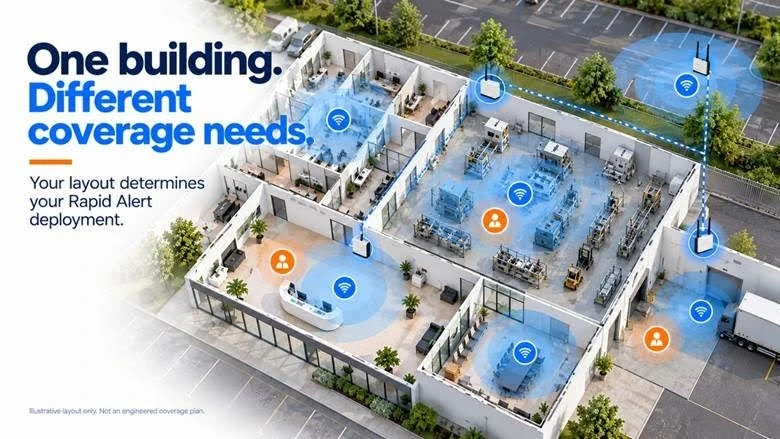
Here’s what to consider:
- The number of people who need badges
- The building’s layout
- Indoor and outdoor coverage requirements
- Gateway locations
- The level of location accuracy needed
A single-building school and a sprawling manufacturing campus, for example, will have very different requirements.
The number and placement of gateways and beacons depend on those details, as does the overall system cost.
Safety and awareness across different environments
These badges are often associated with K–12 security but Rapid Alert has applications across commercial and industrial facilities too.
- Manufacturing: Let employees call for help directly from production floors without needing to find a phone.
- Healthcare: Equip staff with dedicated emergency buttons to request assistance across departments and facilities.
- Corporate offices: Support visitor oversight with location awareness, access restrictions and assistance requests.
- Large campuses: Extend coverage across multiple buildings and outdoor areas using the system’s wireless infrastructure.
Different applications, but the same goal: faster access to assistance and better visibility into what’s happening.
Ready to put Rapid Alert to work?
The right Rapid Alert configuration starts with understanding your facility, who needs protection and where coverage matters most.
Capital Electric can help you work through the hardware requirements, plan your coverage and identify the right components for your project.
[Briefly recap confirmed pricing and current availability; include software licensing and lead times if confirmed.]
Whether you’re outfitting a school, manufacturing facility or commercial campus, let’s talk about what Rapid Alert could look like in your building.
Call 800-227-9473 or email info@capital-electric.com