
The 100-meter limit hasn’t changed in 50 years, but your IP device count has exploded. When devices fall outside intermediate distribution feeder reach, the usual “solution” is a new room, with all the construction, cost and delays included. Constellation gives you a way around all of it.
A smarter way to reach every device on your network
For decades, network design has revolved around one de facto rule: keep every device within 100 meters of an intermediate distribution feeder (IDF) to ensure a strong signal.
That standard made projects predictable and easy to scale.
And it worked right up until buildings, campuses, hospitals and parking structures started demanding more reach – and more devices – than that model could provide.
When those devices fall outside that range, the traditional fix is simple on paper and painful in practice: build another IDF and take a budget hit before you even plug in a switch.
Constellation® from Commscope changes that conversation…and your bottom line.
When a design mistake becomes a 6-figure surprise
It happens more often than you think. Let’s say a new hospital wing goes up, the drawings look solid and then someone realizes the planned intermediate distribution feeder can’t actually reach a cluster of edge devices.
Not by a little, by hundreds of feet.
When the network team ran the numbers, the fix wasn’t simple.
Standing up an additional IDF to meet healthcare-grade standards could cost around $250,000 in networking gear alone.
That doesn’t include:
- Losing revenue-generating rooms to make space
- Construction and permitting
- HVAC, electrical, fire suppression
- Internal approvals
- Delays to the overall schedule
All because a handful of devices fell outside standard reach.
It’s the kind of scenario that forces you to rethink the entire approach and look for options that don’t involve building another room.
Constellation: A mini-IDF wherever you need one
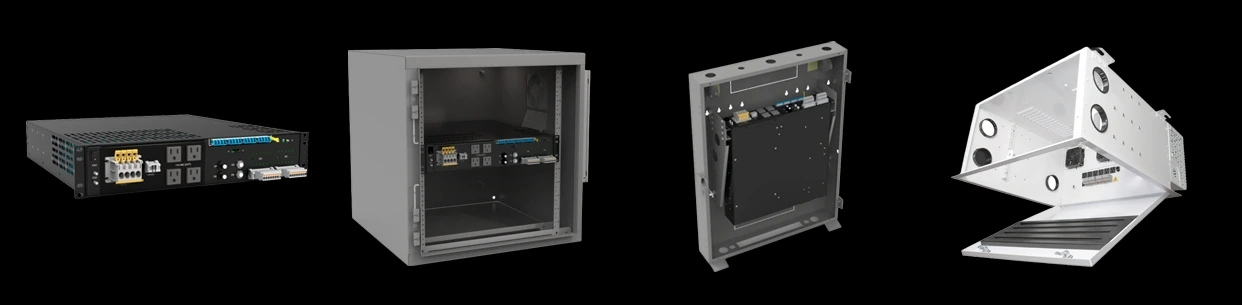
Constellation uses hybrid power/fiber to feed a compact switch environment – really a mini-IDF – right where the devices actually are. No extra construction. No room build-outs. No turf battles over square footage.
Deployable in:
- Hallway ceiling tiles
- Storage closets
- Corridors
- Standard 19” rack (the newest generation)
- Or anywhere a small, secure enclosure fits
As Commscope notes, “At the edge of the Constellation solution is the Constellation Star, a compact distribution node that can be installed in the ceiling, walls or outdoors.
Each Constellation Star supports up to 50 connected devices with 1 kW of power and up to 16 fiber strands”.
A typical Constellation deployment lands well under $250k.
Use case #1: Hospitals
When space is precious and devices are everywhere

Hospitals are packed with non-negotiables: patient rooms, nurse stations, plumbing, med-gas, fire paths.
Everything that eats up real estate before IT even enters the conversation.
Meanwhile, the edge is exploding:
- Cameras
- Access control
- Clinical systems
- Sensors
- Telehealth carts
- Environmental devices
A single IDF rarely covers all of it.
Instead of battling over floor space or building out another closet, Constellation lets teams extend reach discreetly and safely. Ceiling-drop or rack-mount, the footprint is minimal and it keeps projects on schedule instead of triggering construction delays.
Use case #2: Parking structures
A harsh environment with long spans
Parking structures (and airports, as the image above highlights) present an entirely different set of challenges:
- Semi-outdoor conditions
- Extreme temperatures, especially up here
- Moisture, dust, and weather
- Limited secure space
- Long conduit runs
Devices typically include cameras, access readers, vehicle-presence sensors and emergency systems. Constellation supports long runs up to 500 meters and pairs easily with enclosures to protect gear.
Instead of feeding a dozen small zones with expensive pipe and scattered switches, you can centralize everything back to a single IDF. It simplifies installation, cuts material cost and keeps hardware protected.
Use case #3: Large campuses & single-story facilities
The land of dead zones

Schools, multi-building campuses, warehouses, manufacturing plants and hospitality and all run into the same challenge: long spans and remote pockets where devices sit well outside IDF reach.
Constellation makes those gaps easy to cover without redesigning the floor plan or carving out new rooms.
This is especially helpful when:
- Spans run long in a single direction
- Device clusters sit far from existing infrastructure
- Physical constraints limit where an intermediate distribution feeder (IDF) can live
- Older buildings weren’t designed with modern IP loads in mind
Constellation gives you the freedom to place connectivity where it’s actually needed – not just where the building happens to provide space.
Intelligent, cost-saving planning for 2026
Your customers are adding more IP devices than ever and space for additional IDFs is harder to come by. Construction and material costs are up. Schedules are tight. Every added closet comes at a cost.
If you’re heading into a 2026 project with long runs, remote corners or IDF location challenges, Constellation gives you a practical, cost-controlled way to extend your network without expanding your footprint.
If you need help mapping your layout or exploring how Constellation fits into a specific project, Capital Electric can walk you through what’s possible and help you plan it step-by-step.