Structured cabling may only represent around 5% of a project’s network budget, but it can remain in place for decades. As software, switches, devices and smart building systems continue to evolve, the cabling behind the walls plays a major role in what the building can support next.
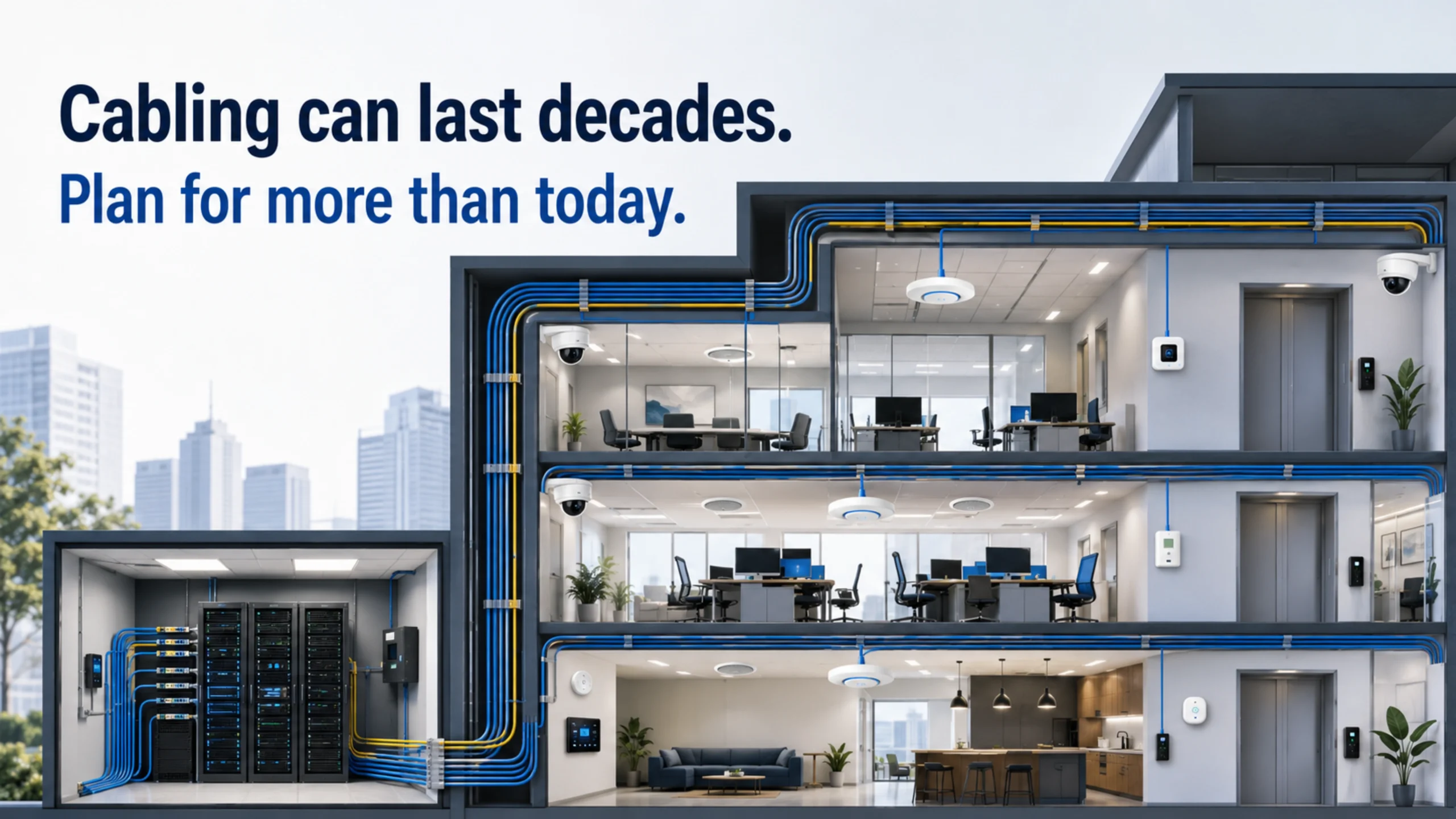
Cabling can last decades; plan for more than just today
Structured cabling is easy to overlook because it’s usually not the biggest number in the network budget; generally around 5% of a project.
But it’ll likely be the system the building lives with the longest.
Software changes. Workstations get replaced. Switches get upgraded. Cameras, access control, wireless access points, audio systems and smart building devices keep evolving.
The cabling behind the walls and above the ceiling often stays right where it is, though.
You don’t see cabling after the build, but it determines what technology infrastructure a project can handle for years to come; that’s why the decision deserves more thought than its percentage of the budget suggests.
Key takeaways
- Consider lifecycle, not just upfront cost. Cabling may represent a small portion of the overall network budget, but it often remains in place far longer than the software, workstations and switches it supports.
- Infrastructure choices affect every connected system. The structured cabling system helps support cameras, access control, wireless access points, audio systems, smart devices and future network upgrades throughout the building.
- Small investments can have long-term impact. As buildings add more devices, more Power over Ethernet and more connected technologies, the cabling infrastructure plays an important role in supporting future growth.
The lowest-cost piece may last the longest
A network budget usually includes several major categories: software, workstations, switching equipment and cabling. Those first three categories change on shorter cycles.
Software is updated constantly. Workstations and PCs get replaced every few years. Switches are upgraded as network needs change.
Cabling is different.
A quality structured cabling system can stay in place for decades. In many cases, it also carries a long-term performance warranty. That doesn’t mean every project needs the highest-end option. It means cabling should be evaluated through the full lifecycle of the building, not just that first project budget.
A few dollars saved on material may matter. But so does the cost of disruption, rework, downtime or replacement if the infrastructure can’t support what comes next.
Cabling choices reach beyond the telecom room
Structured cabling doesn’t operate by itself.
It supports the systems people depend on every day, including cameras, access control, wireless access points, phones, workstations, audio, mass notification, sensors, automation and smart building technology.
As buildings become more connected, that foundation matters more.
The network is no longer only supporting basic data. It is supporting communication, safety, security, uptime and operations.
That makes cabling part of the future-planning conversation. Not because every job needs to be overbuilt, but because the infrastructure should fit where the building is likely headed.
Ask what the building may need next
No one can predict every technology change over the next 10, 15 or 25 years.
But a few practical questions can help guide the decision:
- Will wireless coverage need to expand?
- Will access control grow across more doors?
- Will more devices need Power over Ethernet?
- Will security systems grow and require more cameras?
- Will the space be renovated, expanded or repurposed?
- Will audio, mass notification, sensors or other smart systems be incorporated?
Those are just a few questions to help put the cabling decision in context.
The goal isn’t to make projects more complicated; it’s to make sure the infrastructure installed today can support the systems the building may need tomorrow.
Capital Electric helps you look at the full picture
Structured cabling may not be the biggest line item, but it may be the one your customer lives with the longest.
Before the decision comes down to price alone, talk to Capital Electric. We’ll help you look at cost, lifecycle, performance, availability and what the building may need to support next.
Because once the walls close up, the cheapest cable decision can become a lot more expensive to fix.
Give us a call at (262)788-9700 or shoot us an email at sales@capital-electric.com