
We’re halfway through 2026, and the structured cabling market is feeling pressure from multiple directions. Fiber demand, longer lead times, plenum cable constraints and broader smart-building supply issues are making early conversations more important for projects heading into the second half of the year.
The state of structured cabling
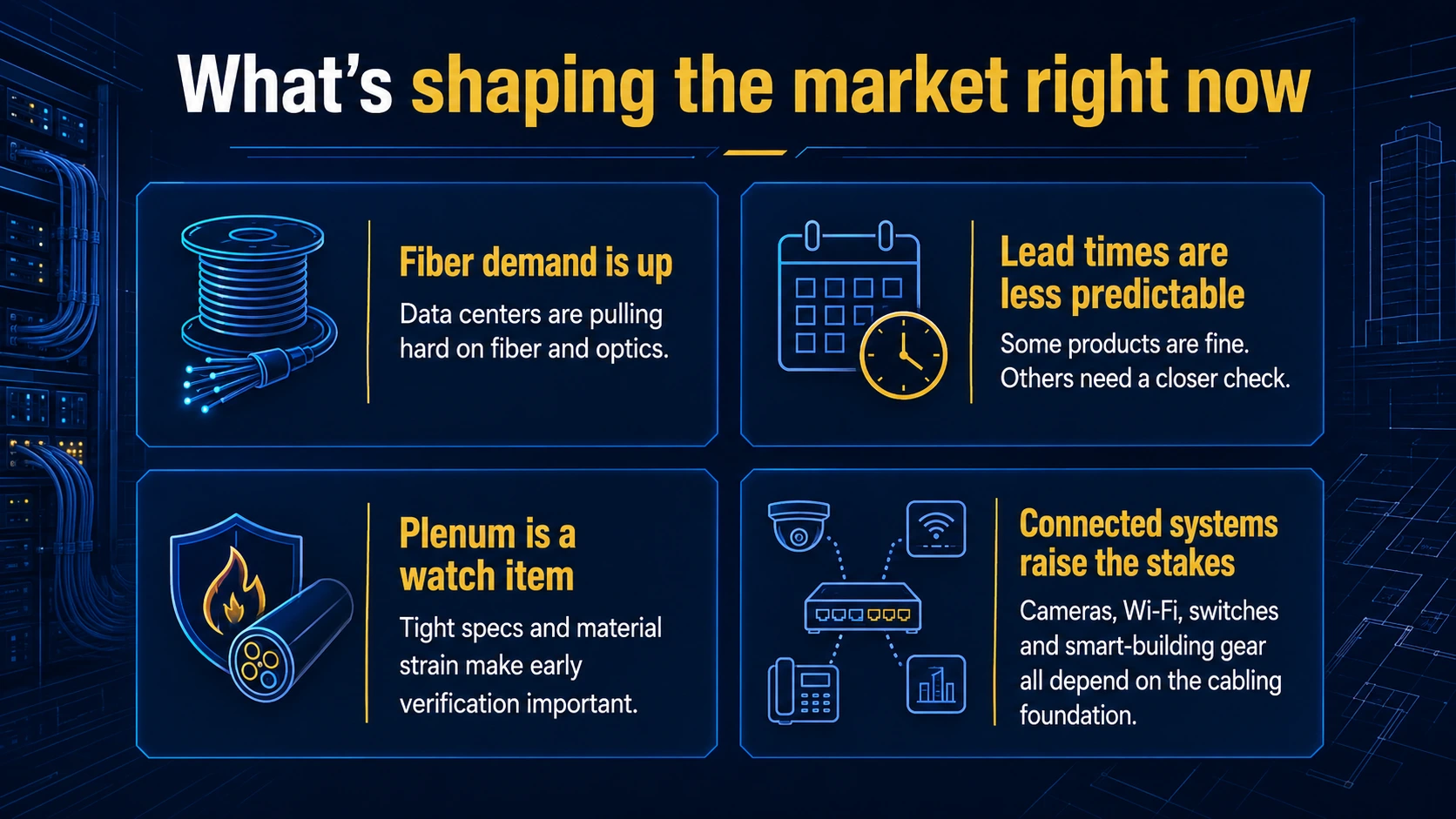
In a nutshell, here’s what we’re halfway through 2026: Fiber demand is high. Data centers are pulling a lot of product. Lead times are stretching. Plenum cable needs closer attention. Some flame-retardant materials used in cable jackets, including Teflon, are under supply-chain strain.
At the same time, chip and memory pressure is affecting the cameras, access points, switches and smart-building devices that connect to all this cable.
For contractors and integrators, the takeaway is simple:
If you have structured cabling work coming up in the second half of the year, check availability now.
Not when the job is about to start.
Not when the customer finally signs.
Now.
Key takeaways
- If your project needs fiber later this year, check availability now. Data center demand is pulling hard on the fiber market, which can affect commercial jobs that have nothing to do with data centers.
- Allow time to approve alternative cables. Alternates are much easier to deal with before the project is already behind.
- If the job calls for plenum cable, don’t assume it’ll be easy to get. Plenum-rated cable and the materials used in flame-retardant jackets are worth checking before the schedule is locked.
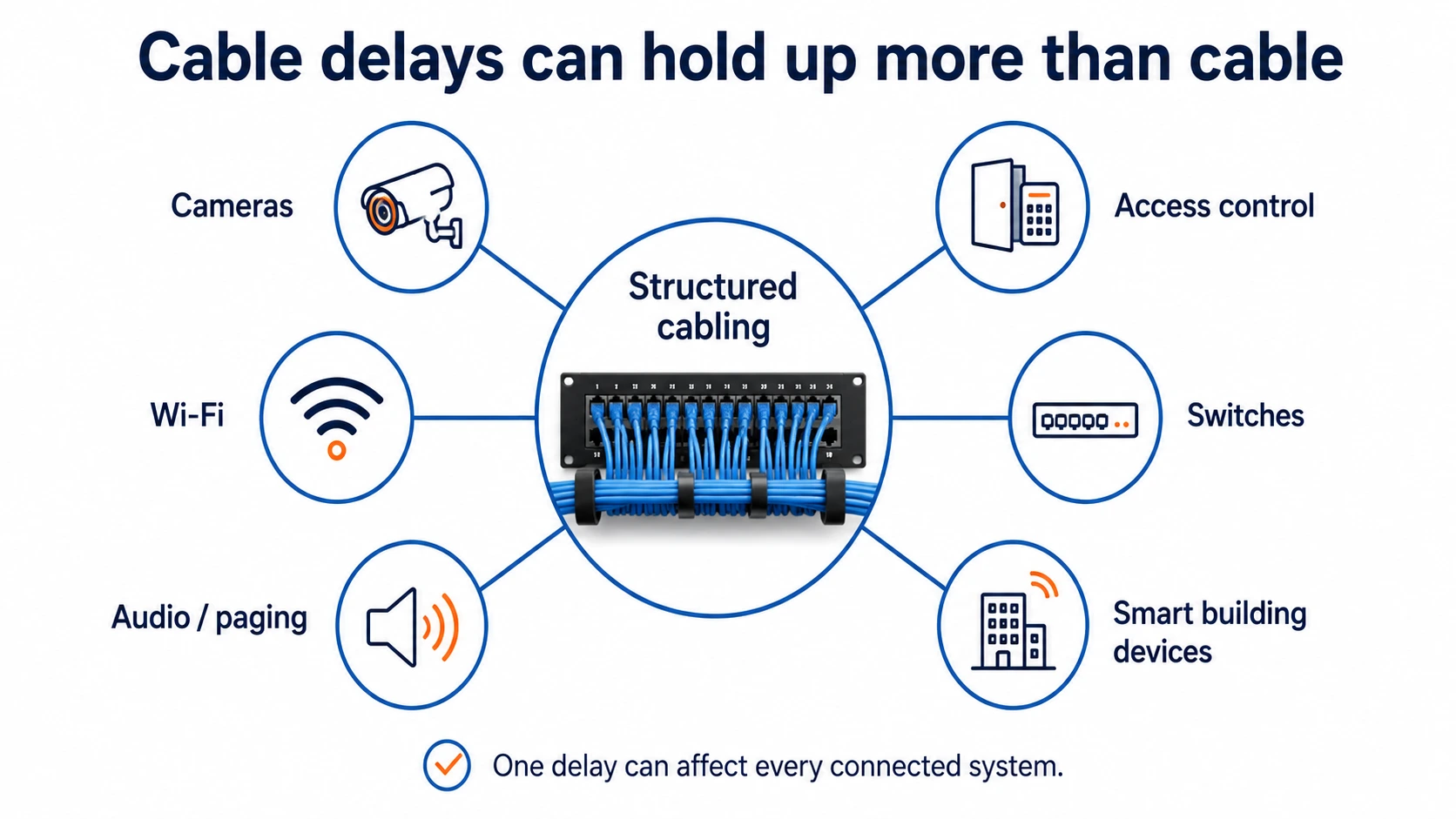
- Cable delays can hold up more than cable. Cameras, access control, Wi-Fi, paging and smart-building systems all depend on the cabling foundation being ready.
Data centers are pulling hard on fiber
A lot of fiber is going into data centers right now. We’re stating the obvious, but let it be a reminder.
Big data center projects consume a lot of infrastructure. When that demand rises, it can stretch lead times and tighten availability across the broader market. That matters whether your project is a school, hospital, office, warehouse or manufacturing facility.
This is already showing up in the optical market. Dell’Oro forecasted the optical transport market to grow 16% in 2026 and said demand will exceed supply this year, with suppliers reporting growing backlogs and longer lead times. Direct purchases for data center interconnect also grew an estimated 40% year over year.
That doesn’t mean every fiber order is a problem. It means you shouldn’t treat fiber availability like a given.
If a project later this year depends on fiber, ask the basic questions early:
- Can we get the product?
- How long will it take?
- Are there alternatives if the preferred option is pushed out?
- Can the material be secured before the jobsite is ready?
Basic questions. Big difference if the answer isn’t what the team expected.
Plenum cable needs to be checked earlier
Plenum cable is another area to watch.
When cable runs through air-handling spaces, the project may require plenum-rated product. That’s not something you can casually swap out at the last minute without checking the spec.
The issue isn’t that plenum cable has disappeared from the market. It hasn’t.
The issue is that some of the materials used to make flame-retardant cable jackets, including materials commonly associated with Teflon, are under supply-chain strain. That can make certain plenum products harder to source or slower to get, especially when the spec is tight on a specific CMP part number.
So treat plenum as an early-check item.
- Is the specified cable available?
- Is there an approved alternate?
- Does the consultant need to review a substitution?
- Can the material be secured before the schedule gets tight?
Those aren’t questions you want to answer after the job is already moving.
Cable delays can hold up the systems around it
Structured cabling doesn’t exist by itself. It supports the systems people are using: cameras, access control, wireless access points, switches, phones, audio, paging, mass notification, sensors, automation and smart-building devices.
That’s why chip and memory pressure matter too.
The gear side is moving fast. For example, Cisco reported total product orders up 35% year over year in May, with networking product orders up more than 50%.
Reuters also reported that memory chip prices had increased sixfold over the past year.
That doesn’t mean every it unavailable. It means pricing, approved SKUs and lead times can move faster than the construction schedule.
If the gear connecting to the cable gets delayed, the project can still get stuck. If the cable is delayed, those systems can’t be installed as planned.
Either way, the schedule gets squeezed.
That’s why the cabling conversation needs to happen alongside the system conversation:
- What is being connected?
- How many devices are going in?
- Where are they going?
- Does the infrastructure support what the customer needs now?
- Will it support what they are likely to add later?
You don’t need to overbuild every project. But you do need to know what the cable is being asked to carry.
Don’t assume the next job will work like the last one
That’s where teams get burned.
The last job may have had short lead times, easy access to plenum cable, limited fiber and fewer connected devices.
This one might not.
Some products may be fine. Some may be tight. Some may need alternates. Some may need to be ordered earlier than usual.
The point: don’t wait to find out what’s different.
What to check before the project gets tight
Before a second-half project gets too far down the road, run through the practical stuff:
- Does the project need fiber?
- Does it require plenum-rated cable?
- What systems will connect to the cabling?
- Does scope include cameras, access control, wireless access points, paging or smart-building devices?
- What are the current lead times?
- Is the specified product available?
- Are alternates acceptable under the project spec?
- Does anything need to be ordered before the site is ready?
- Would phased delivery or storage help keep the job moving?
None of this is complicated and you’re probably covering many of these bases already. We’re reinforcing it because availability is uneven, timelines are tight and assumptions are expensive.
Capital Electric helps you avoid the last-minute scramble
Don’t wait until the job is already boxed in by deadlines, specs and customer expectations.
If you have structured cabling work coming up in the second half of 2026, bring Capital Electric into the conversation early. We’ll help you check availability, review lead times, talk through alternates and figure out what needs to be secured before the schedule gets tight.
A quick conversation now can save a much bigger scramble later.
Give us a call at (262)788-9700 or shoot us an email at sales@capital-electric.com