The cable matters, but so do the decisions made before, during and after installation. A reminder of why professional advice and workmanship can deliver more long-term value than the lowest quote (and maybe even save the project).
The best cable is only as good as the people installing it
A quick story heard through the grapevine. A municipal facility director needed copper gutters repaired on a library with a cedar-shake roof. Historic, beautiful building.
One contractor came highly recommended for a simple reason: he was cheap.
We’ve all been there wanting to save a buck.
The repair was completed. But the contractor hadn’t properly protected the cedar shakes and didn’t carry insurance…
…a fire destroyed the library.
What looked like a good price became an extraordinarily expensive decision.
It’s an extreme example, but the calculation is familiar: the lowest quote looks like savings until the consequences become visible.
Now, a poorly installed cable system probably won’t create such dramatic damage; the costs tend to appear more quietly. Slow performance, dropped signal, lost productivity, repeated troubleshooting and work that eventually has to be done again.
Key takeaways
- Compare more than price. Advice, training and workmanship affect performance and long-term cost.
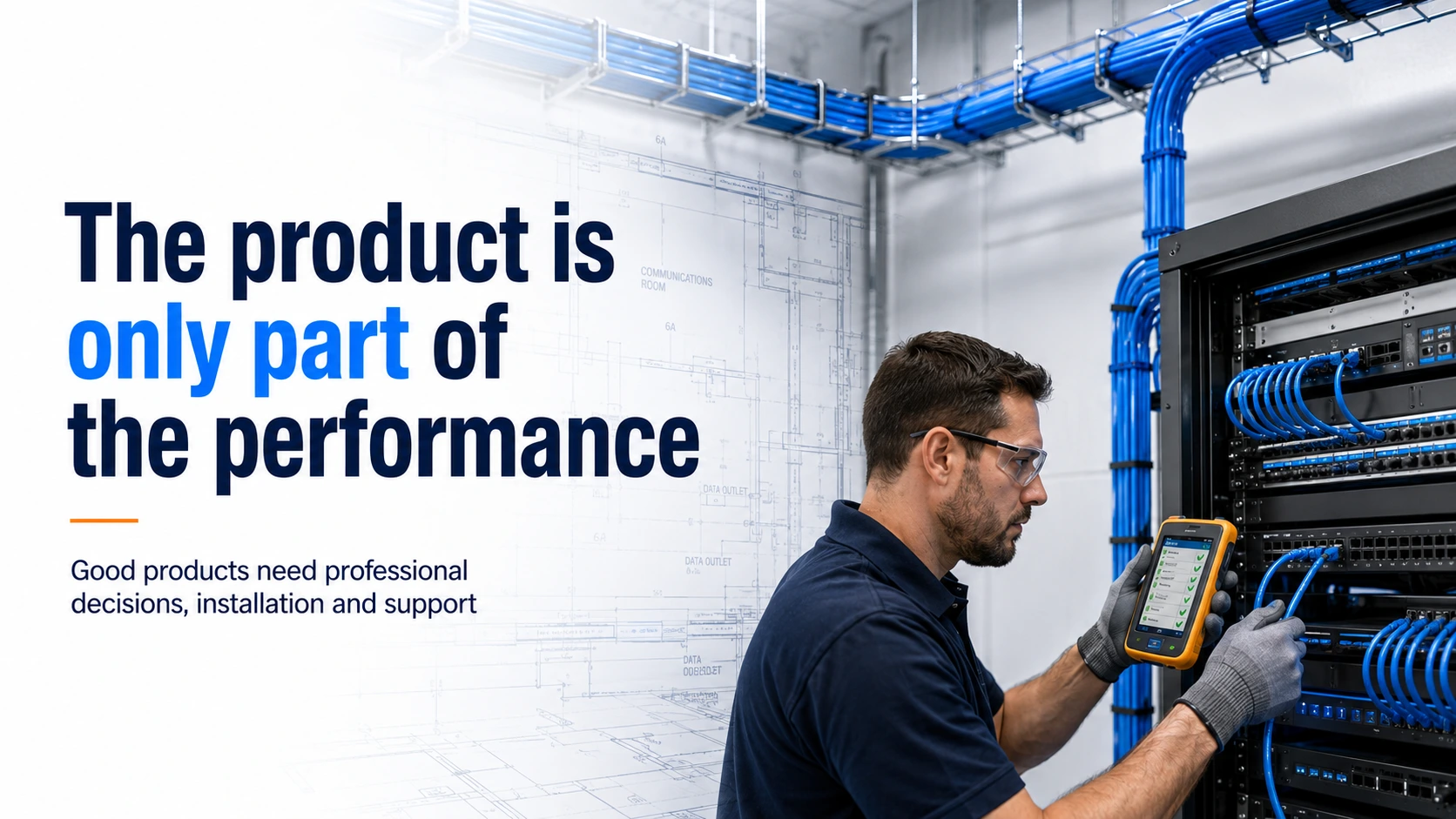
- Protect the product’s performance. Even high-quality cable can underperform when installed incorrectly.
- Ask how the work is supported. Testing, documentation and troubleshooting matter long after installation.
Good products still depend on good decisions
Cabling represents a relatively small portion of the spend on a building project, but it supports nearly every piece of communication happening inside.
So product quality matters, sure, but the quality of the advice behind it matters just as much.
Suppose you ask a contractor to install multimode fiber between two telecommunications rooms.
Contractor 1: Takes the order, buys the materials and completes the installation. Great.
Contractor 2: Starts by asking what you’re trying to accomplish, how the network could grow and whether single-mode fiber would give you a better long-term path. Then does the work the job actually requires.
Contractor 1 wasn’t necessarily wrong, but it may not have been the best decision for the building.
That conversation is part of what you’re paying for.
Professionals know how to install a product while also understanding the options, recognizing the variables and helping you choose a system that fits what you need now without limiting what comes next.
Making the lights blink isn’t the same as making the system perform
Capital Electric can provide the highest-performing Category 6A cable system. If someone kinks the cable, deforms it or untwists the pairs during installation, it still won’t perform as designed.
The connection is there. The lights may blink. Data may move.
But the system could be sitting at the edge of acceptable performance, repeating requests and creating problems that are difficult to trace back to the original installation.
The industry has an unflattering phrase for providers whose only meaningful advantage is price: “two Chucks in a truck”.
That isn’t a criticism of small contractors. Far from it, plenty of small shops do exceptional work. It describes anyone who knows enough to pull cable and make a connection but hasn’t invested in the training, tools and expertise (or insurance) required to know whether the system is performing correctly.
The difference isn’t the size of the truck. It’s the professionalism behind the work.
The real value often appears (long) after installation
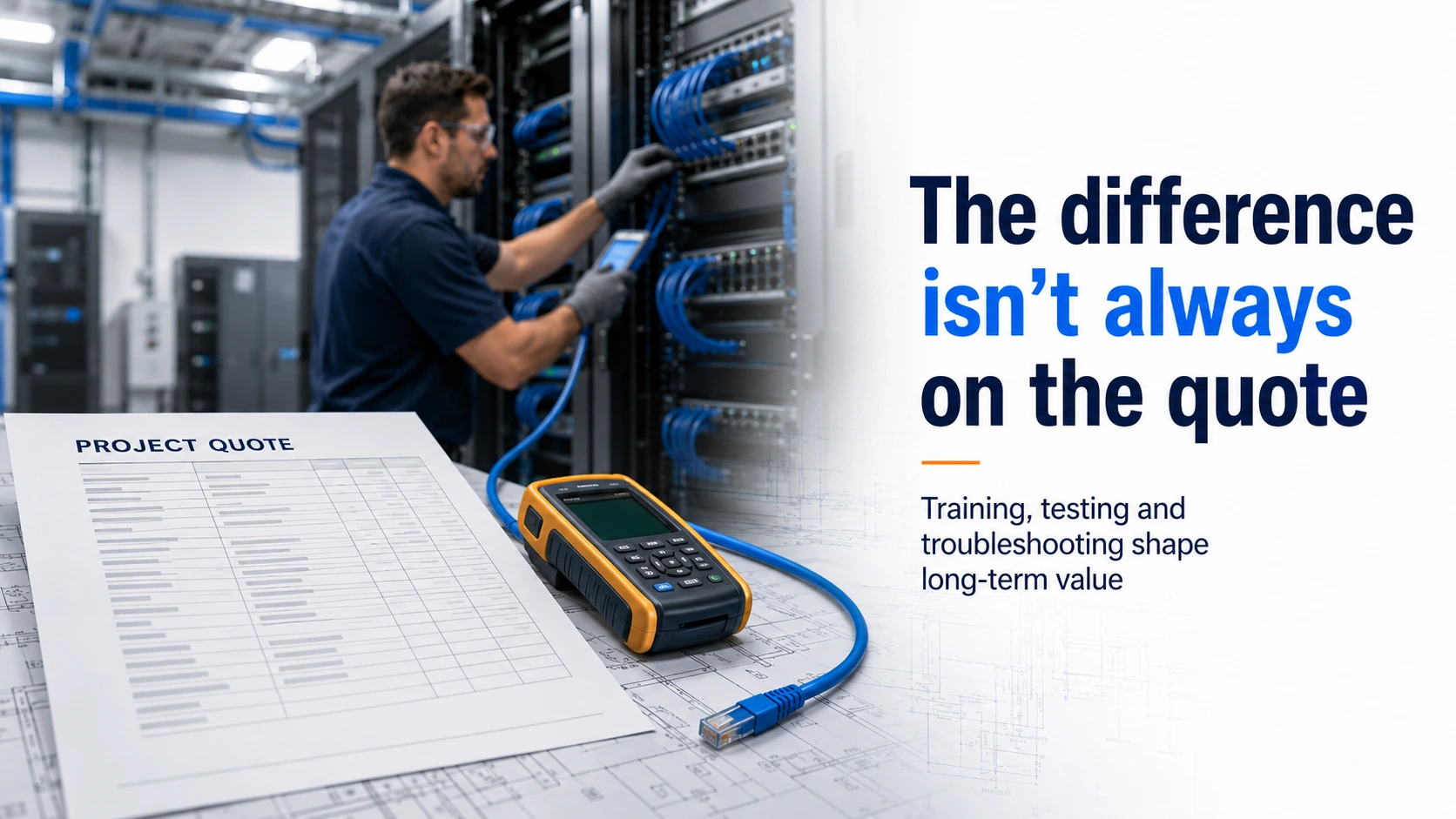
Perhaps most importantly, training and experience change what happens when something goes wrong.
A skilled technician doesn’t start from zero. They already know the most likely causes, understand how the system was designed and can work methodically toward the actual problem. Because they’ve seen it before.
That can mean less troubleshooting because the installation was done correctly in the first place or faster troubleshooting when an issue does occur.
These sorts of things will never appear as separate line items on a quote. Neither do the manufacturer training, industry certifications and testing equipment behind them.
Their value appears in a system that works properly from day one, continues performing over time and can be supported without weeks of trial and error.
Compare more than the price
There’s nothing wrong with looking for a competitive quote. But make sure you understand what you’re comparing.
- Ask about training
- Ask how the contractor tests and documents the installation
- Ask whether the products come with manufacturer-backed warranties
Most importantly, pay attention to whether the contractor asks questions and helps you think beyond the immediate request.
The best products can’t compensate for poor advice, subpar installation or a lack of long-term support.
Contact us at 262-788-9700 or sales@capital-electric.com to talk about the products, partners and expertise that can help you get the complete project right.