The systems in your building can already detects problems. The issue is what happens next. Find out how Singlewire’s InformaCast and Visitor Aware turn everyday events into immediate action…before they become expensive (or dangerous) problems.
When detection isn’t the problem
Most buildings today are full of various systems designed to detect issues.
when something actually goes wrong, what happens?
There’s still a pause. A delay.
Not because the system didn’t see it — of course it did — but because responses aren’t always automatic Cameras watch spaces. Sensors monitor temperature, motion and equipment. Access control tracks who comes and goes. Detection is locked in and hard-coded. They often rely on people.
That’s the gap that both InformaCast and Visitor Aware from Singlewire are built to close.
They don’t replace what’s already in your building; they connect it.
Events trigger responses automatically, the right people are notified instantly and issues don’t sit unnoticed until they turn into something bigger…and costlier.
Meet Singlewire
Something of a local hero, Singlewire is based in Madison, Wisconsin and originally built its reputation around paging systems designed for Cisco environments.
Over time, that foundation expanded.
What started as a streamlined, clean way to broadcast messages has evolved into a platform that can listen to what’s happening across a facility, trigger actions based on real events and keep a record of what occurred.
With so much noise in today’s world, the shift from one-way communication to connected, responsive systems is what makes their tools so relevant now.
Where things break down
What does this mean in practice though? Let’s look at some quick examples.
A server room overheats because an HVAC unit fails overnight.
The sensors pick it up. The system logs it. But no one sees it until the next morning, when performance has already taken a hit and equipment is at risk.
Or take something simpler.
An industrial walk-in freezer fails.
The temperature rises slowly overnight. By the time someone checks it, the inventory is unusable and thousands of dollars of food are as good as garbage, needing to be tossed.
In both cases, the system technically worked exactly as designed, detecting the problem.
What it didn’t do was respond.
When systems start talking to each other
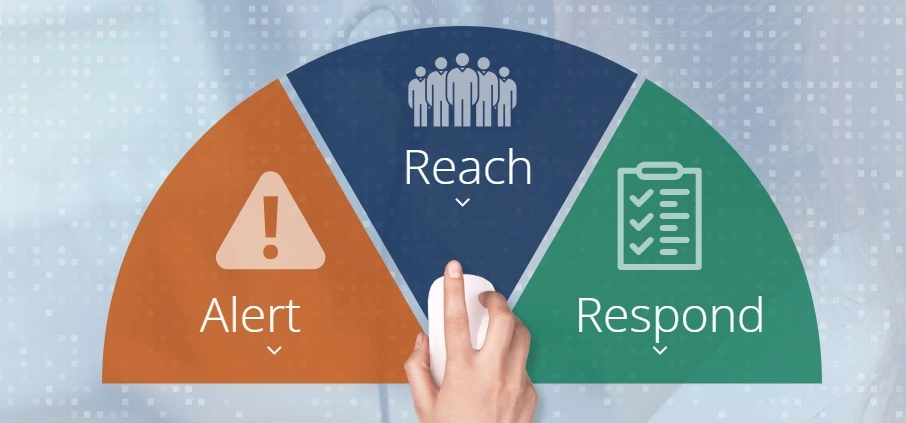
Instead of relying on someone to notice an alert or check a dashboard, InformaCast makes it possible for inputs across your building, like sensors, PLCs, door contacts, equipment, etc. to trigger immediate actions.
A signal comes in and the system reacts — automatically.
That might mean:
- Sending a message to a specific team
- Broadcasting to a defined area
- Notifying key people on their devices
- Triggering a predefined response chain
No one has to monitor screens, no one has to decide what to do in the moment, because you preset the reaction.
The response is already in place.
On a production floor, it means a machine drifting outside its normal range immediately triggers a targeted alert instead of waiting for someone to notice.
In a cold storage environment, it means a temperature spike turns into a real-time notification before it becomes a real loss.
The difference isn’t detection. It’s what happens next.
Beyond alerts: InformaCast documents everything automatically
There’s another layer here that often gets overlooked.
Paperwork.
Yes, it’s a bummer and tedious, but accountability and prevention come with a paper trail.
It’s not just about sending messages; it’s about capturing the event itself so it can be avoided next time.
In large facilities, especially ones with formal safety programs, documentation matters.
- What happened?
- When did it happen?
- How quickly did someone respond?
Instead of relying on manual reporting, InformaCast log these events automatically.
If a trigger is tied to a specific action — like opening an AED cabinet for a defibrillator or a sensor crossing a threshold — that interaction becomes part of a record.
No missed paperwork. No gaps in memory. Just a clear timeline of events and responses.
For organizations that need accountability, that’s almost as valuable as the alert itself.
The practical side of real-time response
This is as much about rare, worst-case scenarios as it is about things that happen all the time.
A worker alone on a late shift collapses. The system detects it and alerts the right people immediately. Help arrives faster than it otherwise would’ve.
A leak starts in a mechanical room. Instead of going unnoticed for hours, it triggers a response before it spreads.
A device goes offline. Instead of sitting undetected for months, it’s flagged right away.
These are day-to-day challenges, edge cases and everything in between, where timing makes all the difference.
Know who’s entering your building
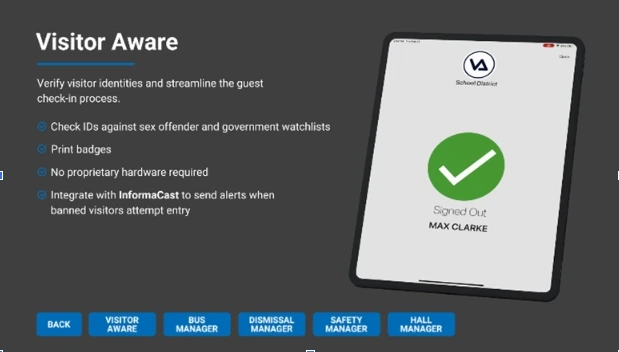
Visitor Aware from Singlewire focuses on safeguarding your entrances, another blind spot, while incorporating InformaCast’s mass notification capabilities.
Think of it like Global Entry for your building; a visitor and student management system identifies and verifies people in an instant.
Replace paper logs and informal processes with a system that can:
- Scan and verify identification
- Log entry in real time
- Maintain a usable record of who was on-site
With no proprietary hardware necessary, Visitor Aware is an easy way to remove uncertainty and deliver peace of mind.
Because if (and when) something does happen, knowing who’s in the building — and having that information immediately — matters more than most people realize.
Check out this interactive demo to see how Visitor Aware and InformaCast work together to keep buildings and campuses safe.
Fixing the gap that already exists
Most facilities don’t need more systems. As we mentioned at the top, they already have plenty of cameras, sensors, access control and monitoring tools in place.
What’s missing is the connection between them.
That’s what Singlewire’s approach solves.
It turns isolated signals into coordinated responses.
It removes the delay between detection and action.
And it makes sure that when something happens, the system doesn’t just log it — it reacts to it.
At the end of the day, the real question isn’t whether an issue can be detected; it’s what happens after it’s spotted.
To learn more about how Singlewire can fill gaps on your next project, give us a call at 262-788-9700